
Featuring

PROGRAMME
Joseph Bologne Saint-Georges (1745-1799)
- ALLEGRO Sonata in G minor, op.1 for violin and piano – Tanya and Rashaan
- RONDO GRACIOSO Sonata in G minor, op.3 for violin and piano – Tanya and Rashaan
Francis “Frank” B. Johnson (1792-1844)
- A Collection of New Cotillions
- THE CYMBALS, piano solo – Rashaan
- WILLIAM, arr. for piano and violin – Rashaan and Tanya
Florence Price (1877-1953)
- ADORATION, arr. for piano and violin – Tanya and Rashaan
- NIGHT, arr. for piano and voice – Nadine and Rashaan
H. Leslie Adams(b.1932)
- FOR YOU THERE IS NO SONG –Text by Edna St. Vincent Millay – Nadine and Rashaan
- CREOLE GIRL – Poem by Leslie Morgan Collins – Nadine and Rashaan
- PRAYER – Poem by Langston Hughes – Nadine and Rashaan
Langston Hughes (poetry) (1901 – 1967)
- MY PEOPLE, by Ricky Ian Gordon, Poem by Langston Hughes – Nadine and Rashaan
Erroll Garner (1921 – 1977)
- MISTY for piano solo – Rashaan
Jessie Montgomery (b.1981
- RHAPSODY No. 2 for solo violin – Tanya
William Leathers (b.2001
- FIVE PIECES for solo trumpet – William
Tyson Davis (b.2000
- TABLEAU No. X for solo trumpet – William
Rashaan Allwood (b. 1994
- TOCCATA piano solo – Rashaan
- LOVER for piano, violin and electronics – Rashaan and Tanya
Johnson Brothers (James Weldon 1871 – 1938; J. Rosamond 1873 – 1954)
- LIFT EVERY VOICE AND SING – piano, violin and voice – Rashaan, Tanya and Nadine
END
Lift Every Voice and Sing
Profile of Black Composers
In 1,000 years of classical musicology, there is barely a mention of Black composers, even though Black musicians have contributed significantly to the evolution of the genre and many have won acclaim while alive, only to be neglected later. The composers included in this year’s program are but a few of such composers that have been overlooked. We also introduce some contemporary composers who are making history. Let’s get to know them, experience their music and keep their names alive for posterity.
The content on this page is written and sourced from biographies and articles on the internet. We cannot guarantee, but trust that the content we collected is accurate. Our objective is to give you, the reader, one single page that combines information on all of the composers we feature in our concert. For your convenience and pleasure, we add links to the sources and other websites, affording you opportunity to delve deeper into the lives and achievements of these remarkable Black classical composers.
Joseph Boulogne, Chevalier de Saint-Georges (1745-1799)
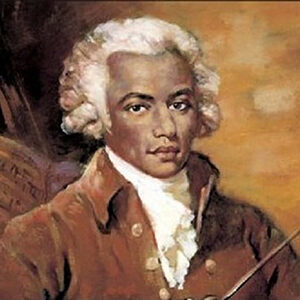 Joseph Boulogne, the Chevalier de Saint-George was a musician, athlete, and soldier. He was the first-ever black composer to write significant works in the western classical tradition. The son of an enslaved Black woman and a wealthy plantation owner, Joseph Boulogne was born in Guadeloupe, and brought to France at an early age. His father wanted to turn him into a French gentleman, and to see a freer life for him as an aristocrat in a more open cultural society that was beginning to emerge in France. At 13 years old, he was enrolled him in a prestigious fencing school where he excelled beyond racial barriers. To further his aristocratic education, his father employed the great composers of Paris to teach his son to play the violin. Here, Saint-Georges discovered his calling. He devoted himself completely to mastering the violin. His technique was said to be extraordinary – as if a fencer translated his right hand technique with the sword to the bow.
Each year, one of his teachers organized special concerts featuring the best musicians from across France to play united in one orchestra, and Saint-Georges was invited to play first violin. This was a daring and bold choice at the time, as a figure like Saint-Georges was an anomaly in the otherwise uniformly white world of high society concert music. But, he wasn’t intimidated, and his performances were heralded as virtuosic.
Being a “mulatto” in what was then a homogeneously white society inspired Saint-Georges to work hard to be recognized. He soon turned to composition as a new way of challenging himself and the limits of the violin. His virtuosic writing and experiments on the violin created a new style of music that even modern masters of the violin still find it extremely difficult to play.
Saint-Georges was a prolific composer with several operas, 15 violin concertos, symphonies and numerous chamber works to his name. He is also credited as being a rare French exponent of early classical violin composition. What’s more, Saint-Georges even served as a violin teacher to Marie Antoinette and as a colonel in the republican army. Virtually unknown to the average American, he was one of the most distinguished figures during the end of France’s old regime and the start of its age of revolution, at the end of the 18th century.
The chevalier de Saint-Georges composed several operas along with symphonic work and other pieces intended for private performance. Only one of his operas has survived in full, although a few vocal pieces survived from his other operas due to their popularity. His works were seldom played after 1803, when Napoleon reinstituted slavery in France’s colonies. The music of Saint-Georges was played with increasing frequency in the late 20th century, and much of it has been recorded since the 1970s.
Francis B. Johnson (1792-1844)
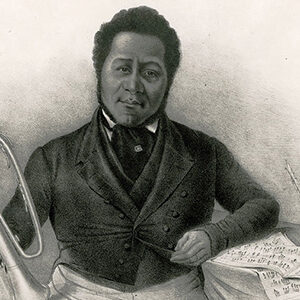 The career and musical legacy of Francis “Frank” Johnson (1792-1844) represent one of the most singular achievements in the history of American music. In an era when full-time musicians were a rarity in the United States, Johnson fashioned a career of such variety and importance that it would be the envy of many a modern musician. Even more remarkable is that Johnson, an African-American, was able to achieve such success against a background of racial strife which worsened even as his work progressed.
Johnson was the composer of over three hundred pieces of music, the majority of which were published. He was a renowned performer on the keyed bugle and violin and led one of the best bands of his time.
Johnson gained greater popularity after publication of his Collection of New Cotillions in 1817. This was the first instance of a black band leader having his musical compositions published. By 1818, 26-year-old Johnson had become a leading dance band conductor for Philadelphia’s high society. During the 1820s, Johnson’s band performed at the city’s most popular dance venues at schools, private parties, and balls. Prominent military regiments like the Washington Guards Company Three Band and the State and the First Troop Philadelphia City Cavalry also hired Johnson’s ensemble. He personalized his performances by experimenting with different instrumentations, strings, and winds.
During his prolific career, Johnson composed over 200 musical arrangements in various styles including cotillions, operatic airs, ballads, quadrilles, patriotic marches, quicksteps, and other forms of ballroom music. Besides serving the musical taste of the white public, Johnson also performed spirituals at African American churches in Philadelphia, Boston, and New York. His was the most popular black band of the era.
In addition to having the distinction of being the first black American composer to have his arrangements published as sheet music, Johnson was also the first African American bandleader to conduct public concerts and in 1837 he led the first American ensemble to perform before Queen Victoria in England. He was the first black musician to perform in integrated musical events in the United States, and the first musician to introduce keyed brass instruments to American bands. Francis Johnson died in 1844 in Philadelphia after a lengthy illness at the age of 52.
Florence B. Price (1877-1953)
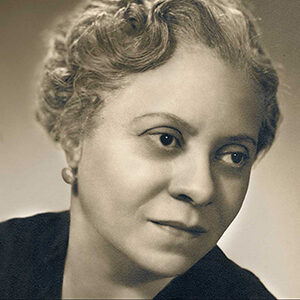 Florence B Price, née Smith, was a composer, pianist and organist, thought to be the first female symphonist of African-American heritage. She composed over 300 works – symphonies, chamber works and songs noted for their lush orchestration and enchanting lyricism – that were performed by leading orchestras and performers, including the Chicago Symphony Orchestra and contralto Marian Anderson.
Price’s life was typical of that lived by middle-class African Americans at the turn of the 20th century. The youngest of three, Florence was born in Little Rock, Arkansas on 9 April 1888 to James and Florence Irene Smith. It was a time when anyone of African heritage in North America was seen as an under-class, no matter their status. Florence Smith, however, grew up at a time and place in the American South where middle-class African-American families could at least progress to a limited degree, which was certainly not the case for African Americans in other parts of the US.
Clearly gifted, the Smith family was considered to be one of the ‘10 percenters’, people that, according to the Harlem Renaissance philosopher and activist W. E. B. Du Bois, had benefited from a classical education and who had the potential to lead American society. The young Florence, steeped in the tenets of the Harlem Renaissance that coursed through the veins of the ‘10 percenters’, entertained her parents’ high-profile guests on the piano. It was an exciting time, with the blossoming of an African-American belief in equal opportunity and equal cultural value as promoted by the fiery Jamaican pan-Africanist orator Marcus Mosiah Garvey, who toured 38 US states in the early 20th century.
In 1903, Florence left Little Rock to attend the New England Conservatory of Music in Boston, where there were only one or two other students of colour (she won her place after following her mother’s advice to present herself as being of Mexican descent).
In just three years at the conservatory, she gained a soloist’s diploma in organ and a teacher’s diploma in piano, and she was the only one of 2,000 students to pursue a double-major in organ and piano. The principal encouraged Florence to compose, which turned out to be life-changing advice. She took lessons in composition and counterpoint and her early works included pieces for piano and organ.
After graduating, Florence Smith returned to the American South to teach. Unfortunately, the notorious Jim Crow law (1877-1954) permeated life in the American South at the time and kept African Americans subjugated and voiceless. Any aspiration was stifled and achievements negated in American daily life.
So despite her qualifications, Price was denied membership to the Arkansas State Music Teachers Association. Instead, she established her own music studio, teaching the piano, music theory and composing short teaching pieces for her students. Additionally, to counter her rejection, she founded the Little Rock Club of Musicians. But racial problems continued to escalate in Little Rock, leading to the lynching of several African-American men in 1927. The Prices fled to Chicago for their safety and for a better quality of life.
She joined the R Nathaniel Dett Club of Music and the Allied Arts to gain friendships with like-minded musicians and artists and continued her composition studies. While studying composition and orchestration her beginner piano pieces were published.
All the while, Price continued to enter composing compositions with some success, including newly-established awards for black musicians and second place in the 1925 and 1927 Holstein Prize for composition. Eventually, her concert music came to the attention of one of her teachers, the composer and organist Leo Sowerby, who became one of her great champions.
In 1932 her big break finally arrived when she won several prizes at the Wanamaker Music Composition Contest: first prize in the orchestral category for her Symphony in E minor (1931-2), first prize for her Piano Sonata (1931) in the solo instrumental category, with the orchestral work Ethiopia’s Shadow in America and the Piano Fantasie mentioned in dispatches.
With her First Symphony with the Chicago Symphony Orchestra on 15 June 1933 at the Century of Progress Exhibition, Price became firmly established as a composer of note and the first black women in American history to have a symphonic work performed by a major American orchestra. ‘It is a faultless work,’ wrote The Chicago Daily News, ‘a work that speaks its own message with restraint and yet with passion … worthy of a place in the regular symphonic repertory.’
The work, originally nicknamed ‘Negro Symphony’, is nearly 40 minutes long and is imbued with African-American spirituals – Price’s music would go on to be steeped in both European and African-American musical and cultural elements including rhythmic syncopation, spiritual melodies, gospel church music, polyphony, references to African dances, blue notes, the pentatonic scale and African instruments such as the marimba.
Florence Price made significant friendships during the 1930s, including with the pianist and composer Margaret Bonds and the contralto Marian Anderson and the writer Langston Hughes. Anderson, who had sung her spiritual arrangement of ‘My Soul’s Been Anchored in the Lord’ in a broadcast from Prague on 6 May 1937, performed the song at the end of her programme at her renowned Lincoln Memorial concert on Easter Sunday in 1939. With 75,000 people attending the performance and many more listening on the radio, Price won overnight fame.
Even with her relative success, Price struggled to keep a roof over her head and was saved from destitution by friends. She suffered from poor health for most of her adult life and was often in hospital. In May 1953, however, her work was gaining momentum, and she was about to fly to Europe to promote her music when she suffered a heart attack and died on 3 June 1953.
H. Leslie Adams (1932 –
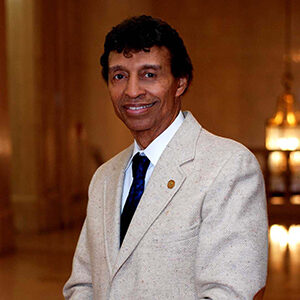 Leslie Adams (b. 12/30/32, Cleveland, Ohio) is a multifaceted composer of music for solo voice, orchestra, opera, chorus, and various solo instruments. Adams is best known for writing music for voice (including choral music, art songs, vocal solos, and music drama) but has also written numerous purely instrumental compositions as well. Adams’s music is composed largely within the tradition of Western classical music and also incorporates elements unique to African-American music
He has worked in all media, including symphony, ballet, choral, vocal solo and keyboard. Adams’ works have been performed by the Prague Radio Symphony, Iceland Symphony, Buffalo Philharmonic, Indianapolis Symphony and New York City Opera.
He has been commissioned by The Cleveland Orchestra, Ohio Chamber Orchestra, and Cleveland Chamber Symphony, among others. Metropolitan Opera artists have performed his vocal works internationally.
His works demonstrate an individual style full of lyricism and representative of his years of musical training. He is a man that takes great pride in living and working as a full-time composer and musician. When asked about this aspect of his life Adams says, “I have the freedom to express myself in any way I see fit, unlike many famous composers of the past, some of whom wrote for patrons or never lived to see their works honored. I am so lucky that I have the chance to express myself without reserve and see others appreciate it also.” This freedom of expression is important to Adams, whose works are classical in nature, yet infused with modem harmonies and style. In his art songs, the compositions typically contain a melody that is continuous throughout the entire piece in the voice and piano. The resulting effect is that the song tune is etched in your mind; even if the words of the song are forgotten, the melody is memorable.
Langston Hughes (1873- 1954)
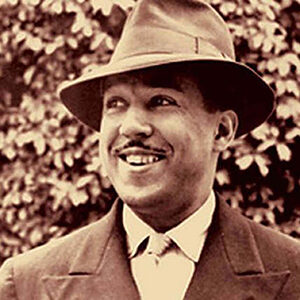 A poet, novelist, fiction writer, and playwright, Langston Hughes is known for his insightful, colorful portrayals of Black life in America from the twenties through the sixties and was important in shaping the artistic contributions of the Harlem Renaissance of the 1920s.
He wrote novels, short stories, plays, and poetry, and is also known for his engagement with the world of jazz and the influence it had on his writing, as in his book-length poem Montage of a Dream Deferred (Holt, 1951). Unlike other notable black poets of the period, Hughes refused to differentiate between his personal experience and the common experience of black America. He wanted to tell the stories of his people in ways that reflected their actual culture, including their love of music, laughter, and language itself alongside their suffering.
Prayer
I ask you this:
Which way to go?
I ask you this:
Which sin to bear?
Which crown to put
Upon my hair?
I do not know, Lord God,
I do not know.
– Langston Hughes
This poem, composed in 1954 reflects the life and mind of its author Langston Hughes. His life as a celebrated and controversial writer allowed him to express himself passionately on a number of issues. “Prayer” is a candid work that can be interpreted in numerous ways. The text deals with the personal turmoil that can occur when attempting to understand life’s purpose, the struggle between right and wrong, and asking God for help with all these issues. The first six lines of the poem are questions, beginning with the line: “I ask you this, which way to go?” Each question suggests a personal crossroads, turning point or internal conflict that culminates in the last line, “I do not know, Lord God, I do not know.” This final personal statement is not a conclusion, but a downhearted and honest response.
Erroll Garner (1921 – 1977)
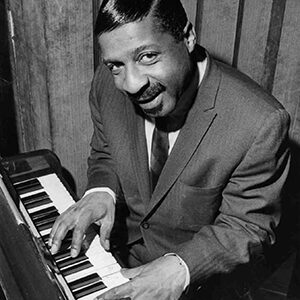 One of the great composers of the Romantic Era
Garner was a self-taught American jazz pianist and composer who never learned to read music. Nevertheless he was one of the most popular jazz musicians of the 1950s.
“Erroll Garner personifies the joy of fearless virtuosity and exploration. His playing celebrated the greatest swinging big bands through an innovative and impossible pianism. Singular yet all embracing, Garner blurred the line between great art and popular art, and he was a staunch journeyman of the blues and his Pittsburgh legacy.”
— Geri Allen
Go here to listen to the music of Erroll Garner
Jessie Montgomery (1981 –
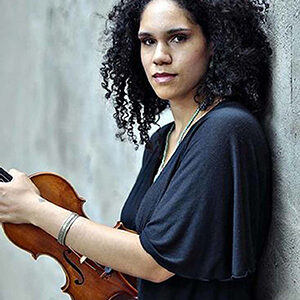 Jessie Montgomery is an acclaimed composer, violinist, and educator. She is the recipient of the Leonard Bernstein Award from the ASCAP Foundation, and her works are performed frequently around the world by leading musicians and ensembles. Her music interweaves classical music with elements of vernacular music, improvisation, language, and social justice, placing her squarely as one of the most relevant interpreters of 21st-century American sound and experience. Her profoundly felt works have been described as “turbulent, wildly colorful and exploding with life” (The Washington Post).
Jessie was born and raised in Manhattan’s Lower East Side in the 1980s during a time when the neighborhood was at a major turning point in its history. Artists gravitated to the hotbed of artistic experimentation and community development. Her parents – her father a musician, her mother a theater artist and storyteller – were engaged in the activities of the neighborhood and regularly brought Jessie to rallies, performances, and parties where neighbors, activists, and artists gathered to celebrate and support the movements of the time. It is from this unique experience that Jessie has created a life that merges composing, performance, education, and advocacy.
Since 1999, Jessie has been affiliated with The Sphinx Organization, which supports young African-American and Latinx string players. She currently serves as composer-in-residence for the Sphinx Virtuosi, the Organization’s flagship professional touring ensemble. She was a two-time laureate of the annual Sphinx Competition and was awarded a generous MPower grant to assist in the development of her debut album, Strum: Music for Strings (Azica Records). She has received additional grants and awards from the ASCAP Foundation, Chamber Music America, American Composers Orchestra, the Joyce Foundation, and the Sorel Organization.
Her growing body of work includes solo, chamber, vocal, and orchestral works. Some recent highlights include Five Slave Songs (2018) commissioned for soprano Julia Bullock by the Metropolitan Museum of Art, Records from a Vanishing City (2016) for the Orpheus Chamber Orchestra, Caught by the Wind (2016) for the Albany Symphony and the American Music Festival, and Banner (2014) – written to mark the 200th anniversary of The Star-Spangled Banner – for The Sphinx Organization and the Joyce Foundation.
In the 2019-20 season, new commissioned works will be premiered by the Orpheus Chamber Orchestra, the National Choral Society, and ASCAP Foundation. Jessie is also teaming up with composer-violinist Jannina Norpoth to reimagine Scott Joplin’s opera Treemonisha; it is being produced by Volcano Theatre and co-commissioned by Washington Performing Arts, Stanford University, Southbank Centre (London), National Arts Centre (Ottawa), and the Banff Centre for the Arts. Additionally, the Philharmonia Orchestra, Atlanta Symphony, Dallas Symphony, Minnesota Orchestra, and San Francisco Symphony will all perform Montgomery’s works this season.
The New York Philharmonic has selected Jessie as one of the featured composers for their Project 19, which marks the centennial of the ratification of the 19th Amendment, granting equal voting rights in the United States to women. Other forthcoming works include a nonet inspired by the Great Migration, told from the perspective of Montgomery’s great-grandfather William McCauley and to be performed by Imani Winds and the Catalyst Quartet; a cello concerto for Thomas Mesa jointly commissioned by Carnegie Hall, New World Symphony, and The Sphinx Organization; and a new orchestral work for the National Symphony.
Jessie began her violin studies, at the Third Street Music School Settlement, one of the oldest community organizations in the country. A founding member of PUBLIQuartet and currently a member of the Catalyst Quartet, she continues to maintain an active performance career as a violinist appearing regularly with her own ensembles, as well as with the Silkroad Ensemble and Sphinx Virtuosi.
Jessie’s teachers and mentors include Sally Thomas, Ann Setzer, Alice Kanack, Joan Tower, Derek Bermel, Mark Suozzo, Ira Newborn, and Laura Kaminsky. She holds degrees from the Juilliard School and New York University and is currently a Graduate Fellow in Music Composition at Princeton University.
Tyson Davis (b.2000)
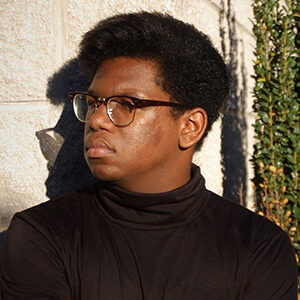 Tyson Davis began composing at the age of eight years old. He entered the University North Carolina School of the Arts (UNCSA) as a high school freshman, studying with Lawrence Dillon. He has taken advantage of numerous opportunities at the school, writing for Eighth Blackbird, the Attacca String Quartet, UNCSA Cantata Singers and the UNCSA Symphony Orchestra. In the summers, he has attended Interlochen Summer Music Camp, where he had works for chorus and percussion ensemble premiered and earned the Fine Arts Award, and Curtis Summerfest, where he worked with David Ludwig. In the summer of 2019, Tyson work with the National Youth Orchestra of the United States of America (NYO-USA) and Antonio Pappano to premiere his work, Delicate Tension, a piece that was commissioned by the American Embassy in Berlin for the 30th Anniversary of the fall of the Berlin Wall. The work was performed in Berlin, Edinburgh, and Hamburg. Since then, Tyson has started as an undergraduate at The Juilliard School, where he continues his studies in composition and is a recipient of the Jerome L. Green Fellowship. His work, Delicate Tension, recently won the 68th BMI Student Composer Awards as well as the ASCAP Morton Gould Young Composer Awards.
John Rosamond Johnson (1873-1954) James Weldon Johnson (1871 – 1938)
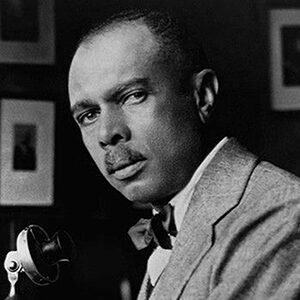
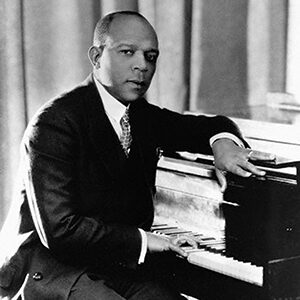
Composer, actor, and pioneer in his field, John Rosamond Johnson was one of the most successful of the early African American composers. Born in Jacksonville, Florida, Johnson was the younger brother of prominent composer and civil rights leader James Weldon Johnson. Over his lifetime, Johnson arranged more than 150 spirituals and over 160 musical theatre numbers. Original and expressive, Johnson’s work propelled him to international acclaim. Of the music that Johnson wrote himself, Lift Every Voice and Sing (1900) is the best known. The song was so popular that the National Association for the Advancement of Colored People (NAACP) dubbed it The Negro National Anthem.
On Feb. 12, 1900, Lift Ev’ry Voice and Sing was performed by school children in Jacksonville, Fla. The song’s author was James Weldon Johnson, a renaissance man who was an educator, lawyer, novelist and activist. Johnson initially imagined Lift Ev’ry Voice and Sing as a poem that would celebrate the birthday of Abraham Lincoln. But on the page it became something else.
Johnson’s lyrics told the story of Black life in terms that were epic, wrenching, and thunderous. It was in the same tradition as famed abolitionist Frederick Douglass, who, like most enslaved children, hadn’t had his birth date recorded. However, he’d chosen Feb. 14 as the day on which he would celebrate his birth, two days after Lincoln’s. Douglass’ classic, Narrative of the Life of Frederick Douglass, told the story of his journey from slavery to freedom with drama, passion, breathtaking emotion and stunning brilliance.
Johnson’s poem did something quite similar.
He recalled his writing process: “A group of young men decided to hold on February 12th a celebration in honor of Lincoln’s birthday. I was put down for an address, which I began preparing, but I wanted to do something else also. My thoughts began buzzing round a central idea of writing a poem about Lincoln but I couldn’t net them. So I gave up the project as beyond me…My central idea, however, took on another form. I talked over with my brother the thought I had in mind and we planned to write a song to be sung as part of the exercises. We planned better still to have it sung by school children, a chorus of 500 voices.”
Johnson’s brother, Rosamond, was a composer. They hailed from Jacksonville, then the largest city in Florida with a population that was over 50 percent Black. It was a robust community, but one that lived under the thumb of a racially unjust system. In response to the rise of Jim Crow, Black Americans there, and across the nation, turned inward and organized. In the last 35 years of the 19th century more than 1,200 black newspapers were founded, and at the dawn of the 20th they served a vital function in Black life and letters. Black schools, from elementary to college were steadily opening and growing across the country. Black musicians were pursuing formal training, publishing their compositions and formalizing traditional folk. The range of musical conventions explored by Black musicians was expanding. Black literature was being published and activists described it as an important tool for racial uplift. Black people were writing themselves into history as scholars and biographers. Lift Ev’ry Voice was a part of that powerful energy.
The Johnson brothers left Jacksonville for New York. Unbeknownst to them, their song spread almost immediately, first across Florida and through the rest of the South. By the 1910s it was colloquially being described as the Negro anthem. And in 1919, though it rejected the idea of a separate “anthem” for African Americans, the NAACP declared Lift Ev’ry Voice and Sing as its official song.
The song began with children, and in some ways its greatest legacy is in the impact it had upon children. When Carter G. Woodson formally declared Negro History Week in 1926, Lift Ev’ry Voice was enmeshed in the annual celebrations of Black history and culture in schools, and in the daily or weekly assemblies. Teachers and community leaders situated the song as a central feature of Black children’s lives.
For decades it was undeniably Black America’s most cherished song. One can hardly overestimate its impact. For example, during the Montgomery Bus Boycott, singing Lift Ev’ry Voice and Sing was commonplace during the mass meetings that were held during the long months of the boycott lasting from Dec.5, 1955, to Dec. 20, 1956. And the Rev. Martin Luther King Jr. would quote the song in some of his most stirring speeches.
During the Black Power Movement, Lift Ev’ry Voice and Sing was being sung with raised fists by people wearing afros and dashikis. Instead of calling it the Negro National Hymn, it began to be designated the Black National Anthem. In the 1970s, as Black mayors were elected in cities across the country, Lift Ev’ry Voice became a feature of inauguration ceremonies. To this day, it remains a signature element of Black formal occasions and celebrations.
A 2018 Washington Post article noted the significance of the song in society today. For example, at the 2009 inauguration of Barack Obama, the nation’s first Black president, civil rights leader Rev. Joseph Lowery started his benediction by reciting the third stanza of Lift Ev’ry Voice and Sing. As the Black Lives Matter movement brought attention to the killing of unarmed Black men and women by police, the anthem was sung at protests and on the sidelines of NFL games when Colin Kaepernick was kneeling. And when musical icon Beyonce headlined Coachella in 2018, she sang Lift Ev’ry Voice and Sing during her ode to historically Black colleges and universities.
Lift Ev’ry Voice and Sing is a reminder of the solidarity, commitment and community that African Americans forged to not merely survive in this nation, but to create beauty in the face of persistent injustice. – Imani Perry is the author of May We Forever Stand: A History of the Black National Anthem, University of North Carolina Press, 2018 and the Hughes-Rogers Professor of African American Studies at Princeton University.
2020______________________________________
Harry Thacker Burleigh (1866—1949)
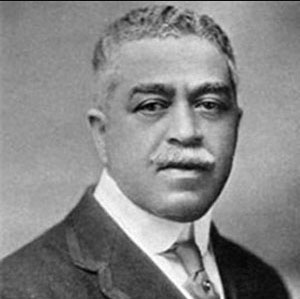
Although his name is relatively unknown, Harry Thacker Burleigh played a significant role in the development of American art song, having composed over two hundred works in the genre. He was the first African-American composer acclaimed for his concert songs as well as for his adaptations of African-American spirituals. became known for his arrangements of spirituals for voice and piano. In addition, Burleigh was an accomplished baritone, a meticulous editor, and a charter member of the American Society of Composers, Authors, and Publishers (ASCAP).
He was the first Black singer hired at St. George’s Episcopal Church in Manhattan and at Temple Emanu-El, desegregating both institutions. Harry T. Burleigh concerts are still held in May every year at St. George’s Church in honor of his music.
Samuel Coleridge Taylor (1875-1912)
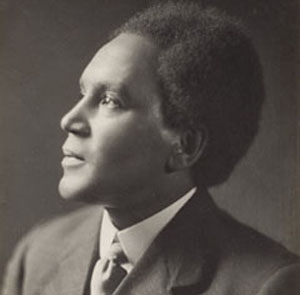
Afro-British composer and conductor, who today is almost completely forgotten. At the turn of the twentieth century Samuel Coleridge-Taylor was one of Britain’s most outstanding and celebrated composers.
Taylor rose to prominence in 1898 at age 23 on the strength of two of his many works throughout his career Ballade in A Minor and his most famous work, Hiawatha’s Wedding Feast. This piece of music was described as one of the most remarkable events in English musical history.
Will Marion Cook (1869 – 1944)

Will Marion Cook was the first great African-American composer for the musical stage. But he found that the only musical career open to him in America was in the New York theater, where blacks were free to compete for audiences among a host of presenters dealing in languages of ethnic stereotype: Irish, German, and the last stages of the existing white caricature of black life known an minstrelsy.
Scott Joplin (1868 – 1917)
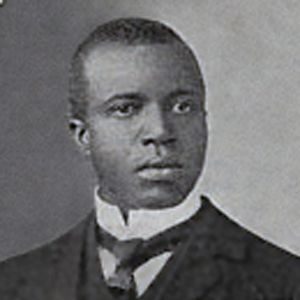
Scott Joplin took up the piano as a child and eventually became a travelling musician as a teen. He immersed himself in the emerging musical form known as ragtime and became the genre’s foremost composer with tunes like “The Entertainer,” “Solace” and “The Maple Leaf Rag,” which is the biggest-selling ragtime song in history. In 1908 he published a series that broke down the complexities of ragtime form for students: The School of Ragtime: Six Exercises for Piano. Joplin also penned the opera, Treemonisha, one of the few surviving live performance pieces about the immediate post-slavery era written by a Black person who actually lived through it. A production of Treemonisha is currently (2020) in development at Toronto’s Volcano Theatre.
REFERENCES:
Joseph Boulogne, Chevalier de Saint-Georges (1745-1799)
https://www.artaria.com/pages/saint-georges-joseph-bologne-de-1745-1799
https://blackthen.com/joseph-bologne-le-chevalier-de-saint-georges-the-black-mozart/
Francis B. Johnson (1792-1844)
https://songofamerica.net/composer/johnson-francis-b/
https://blackfacts.com/fact/johnson-francis-1792-1844
| Francis B. “Frank” Johnson (1792-1844) African American Bugler, Band Leader & Composer |
William J. Zick All rights reserved for all content of AfriClassical.com
https://chevalierdesaintgeorges.homestead.com/JohnsonF.html
Florence B. Price (1877-1953)
A guide to Florence Price By Freya Parr October 3, 2019 at 9:36 am
https://www.classical-music.com/features/composers/guide-florence-price/
https://songofamerica.net/books/the-heart-of-a-woman-the-life-and-music-of-florence-b-price/
H. Leslie Adams (1932 –
https://www.thehistorymakers.org/biography/h-leslie-adams-38
Langston Hughes (1873-1954)
https://www.lincoln.edu/node/1340/about-langston-hughes
https://songofamerica.net/resources/program-12-langston-hughes-the-harlem-renaissance/
Jessie Montgomery (1980 –
https://www.volcano.ca/jessie-montgomery
H. Rosamond Johnson (1873-1954) and James Weldon Johnson (1871 – 1938)
https://portside.org/2020-02-15/120th-anniversary-lift-evry-voice-and-sing
https://www.blackpast.org/african-american-history/johnson-j-rosamond-1873-1954/
- POSTED ON JUNE 27, 2008 CONTRIBUTED BY: SHANNON ERICKSON
Erroll Garner (1921 – 1977)
https://www.errollgarner.com/biography
H.T. Burleigh (1866-1949)
https://www.loc.gov/item/ihas.2000355730
H.T. Burleigh (1866-1949) | Library of Congress (loc.gov)
Samuel Coleridge-Taylor (1875-1912)
Notable African American Musicians
https://chevalierdesaintgeorges.homestead.com/Song.html
Will Marion Cook (1869-1944)
https://www.blackpast.org/african-american-history/cook-will-marion-1869-1944/
- POSTED ON JUNE 27, 2008 CONTRIBUTED BY: SHANNON ERICKSON
https://www.king.org/ten-great-black-composers-to-know/
6 Black Composers Who Made Classical Music History
February 21st, 2018 by Ryan Merriweather
https://sonicscoop.com/2018/02/21/6-black-composers-made-music-history/
Thank You to our valued sponsors and partners
Presenting Sponsor – TD
We are proud to be part of the TD 2021 Black History Month Series, and value TD’s participation as our Presenting Sponsor for the sixth year, as we continue to showcase Black excellence to audiences from coast to coast to coast. Thank you TD, we are truly grateful!
Celebrations and Revelations 2021 was recorded inside the superb Revolution Recording Studio in Toronto. Thank you to Kim Cooke and the hugely efficient recording engineers, Luke Schindler and Matteo Peraccini. –you made us sound great!
And to the award-winning, veteran engineer – producer, and my valued friend of 40 years, Doug McClement, of LiveWire Remote Recorders Ltd. – Thank you Doug for your expertise and your guidance!
Our show was filmed and edited by the award winning technical producer, Keith Holding of Media Tribe Interactive Inc. Thank you Keith and your team, for making us look great!
To the indispensable Amy Kitchen of Better Than Fine for everything social media and an abundance of patience. Thank you and Big hugs to you Amy!
Special thanks
To Andrew Russell, for researching Black composers. Thank you warmly!
To Beverley Durham for not only catering a fine meal, but also creating the individually labeled boxes than added pleasure to our socially distanced dining.
And to YOU, our audience and supporters, from our hearts to yours, thank you for supporting Black History Month Concert Tours!